Thursday, January 28, 2010

The Hidden Blade


Hidden Blade (2004)

Director – Yoji Yamada

Writer – Yoji Yamada

Yoshitaka Asama

Cinematography – Mutsuo Naganuma

Art Direction – Yoshinobu Nishioka

Actor Character

Masatoshi Nagase ... Munezô Katagi

Takako Matsu ... Kie

Hidetaka Yoshioka ... Samon Shimada

Yukiyoshi Ozawa .... Yaichirô Hazama

Ken Ogata ... Chief Retainer Hori

The Hidden Blade is a perfect example of minimalist filmmaking excelled through powerful story and believable characters. Everything is restrained and confident in the film including the direction, acting and cinematography. It doesn’t show off or try to be something it isn’t. Even the emotions of the characters are reserved. Much of the lighting in the film is naturalistic as is the cinematography. The depth of focus is even through out the film keeping your attention on the immediate. The foreground and background are equally as important as the characters are with their village and the world. This equality lets all the actors be important through a lack of distracting flashy camera angle. It is remarkably simplistic yet impressive.

The recurring theme is duty vs. individual desire. A constant tension throughout the film

restrains the characters from exercising their desires as seen by the underlying love story between Kie and Munezô. Munezô takes her in as a maid despite her being of a lower caste. He falls in love with her and hides it due to his reputation as a samurai.

One of the most interesting scenes is at the funeral of Munezô Katagi’s mother. His uncle and Bunemon insult him for using firearms in front of the lord. His uncle tells them they should use swords and spears as the require skill whereas cannons do not. “Swords require skills that decide the victor” says his uncle. The discarding of the old weapons which represent tradition for modern one insults the elders as they see their culture diluted by modern practices. They see this as they themselves being replaced. To add insult to injury this is suggested by Munezô who is 40 years old and not married yet. He cannot marry as he is in love with Kie who would tamper his reputation being she is a lowly maid and she is already married.

When Munezô finds out she is deathly sick he is outraged his friends don’t tell him as he is the only one who really cares for her. Her mother-in-law keeps her in a cold little room, tucking her problem away. After a week or so with him she feels better and is cheerful again. The funniest part is when the mother-in-law tells him she is married to which he tells his friend, Samon, to write a statement of divorce.

His deepest friend, Hazama, who left to Edo for an important mission has now been jailed for plotting rebellion. He was involved with the Shogunate. Now Munezô has to see Chief Retainer Hori because of his connection to Hazama. Their connection is that they studied fencing and sword fighting together under Master Toda.

Hazama left in anger when Munezô was chosen by Toda over Hazama to learn the specialized school of the “Hidden Blade.” The overseer questions him and tempts him with a list of names and asks Munezô to tell them who was friendly with Hazama. He refuses. “A samurai does not inform on his fellows.” Munezô chooses honor over opportunity. The risk of death is a bargain over tarnishing his name. A fate he compassionately tries to offer Hazama later in the story.

Munezô’s father follows Bushido code of courage by taking responsibility and his life over a business discrepancy that wasn’t his fault. He sacrifices his life to save his fellow workers without question. This pain leaves Munezô to be a father figure to Kie in return for his father’s bravery.

The film values order and duty. Everyone knows their place and everyone does what they are suppose to do. Questioning this is unthinkable and an insult to authority. Social harmony is more important than individual opinions and differences. This is shown in the sense when Munezô asks Kie to tell him a poem which she shyly does. He enjoys it but her attraction to him intimidates her. He asks her again so she complies. She knows her place, he knows his. Another area duty is shown is when Munezô ordered to kill his closest friend Hazama to which he reluctantly agrees.

The love between Munezô and Kie is strong. Their emotions are subdued as they are from different castes and his almost fatherly role over her. She was his maid for three and a half years. He cannot afford to have rumors of him sleeping with her. This taboo adds to their attraction. On top of that he has a protector personality as seen when he pleads with Hazama to end his life with honor than fight with a tarnished name. The scene where he orders her to leave is excruciating to watch because we know their pain and his reluctance to truly want her gone.

Munezô now under pressure from authorities and rumors of his relationship to Kie caves in and agrees to kill his friend Hazama. He does so more out of duty and his role as a obedient position to his master. He is the only swordsman who capable of defeating him. He is cornered from all sides emotionally.

One of the best scenes from the film is when Munezô goes to his old sensei telling him he must kill his friend. It is the saddest part of the film because his teacher complies as did Munezô when the overseer pressures him. As they train to fight he tells Munezô to relax his body and mind. His teacher shows him to frustrate and anger his enemy as a weapon against him.

Spoilers

Hazama’s wife visits Munezô and asks him for a favor wearing a black cloak. This foreshadows her being a widow. She begs him to let Hazama escape. She even offers herself in desperation. It is humiliating to watch. This is something Cheif Retainer Hori takes advantage of later.

Munezô shows bravery by pleading with his old friend, Hazama, to commit suicide and he will follow in turn out of respect. He tells him if he doesn’t he has to kill him. Munezô pleads with Hazama to accept Hara-kiri, suicide, to protect his name and the reputation of his wife who will be known to have married a criminal.

When Hazama is finished by Munezô, riflemen shoot at him – the most dishonorable way to die – outside the blade.

Munezô talks to the Senior Retainer and explains himself. He asks if Hazama’s wife saw him last night. Chief Retainer Hori promised to let Hazama escape because he slept with her to which he brags to his friend and geishas. He lies to her justifying Hazama’s fate was already sealed and she knew he would die anyways. Munezô keeps his composure in light of Senior Retainer admitting his lie. Munezô redeems himself by standing up to Retainer Hori by killing him later in secret using the secret of the “Hidden Blade.”

As Munezô clears his conscience and responsibility he retreats to the wilderness to find someone special.

What makes The Hidden Blade so good is its subtle performances, restrained cinematography and attention to detail. The set direction and pieces in the film were extremely realistic. The costumes are also very well made and add to this realism. The film never shows off or has pretentious moments.


10/10

Sunday, January 17, 2010

Buñuel: The Exterminating Angel - Trading One Hell for Another


I observed things that moved me and I wanted to transpose those things on to the screen -- but to do so with love I have for the instinctive and the irrational that can reveal itself in anything and everything. I've always been drawn toward the strange and the unknown.


Everyone is free to find in my films anything he likes or whatever is useful to him.


In the name of Hippocrates, doctors have invented the most exquisite form of torture ever known to man: survival.


-Luis Buñuel

The Exterminating Angel

A dinner group becomes inexplicably stuck in a room under mysterious circumstances unable to leave. As they become annoyed by this phenomenon they try to figure out how to leave degrading from pettiness to savagery. The high society group stays here trying to leave until irrational logic saves them from the most unexpected of places.


Buñuel like no other director understands class hypocrisy, religion and surrealistic absurdity. The Exterminating Angel is obsessed with class hypocrisy especially in the elites plight for survival. Survival is stressed here in both physical and social. After being invited to the opera and back home the dinner guests cannot leave due to some inexplicable spell. They ignore this minor inconvenience through fake manners in turn eased by nasty gossip. Buñuel is mocking high society similar to the way Robert Altman did in Gosford Park.

The film starts off on Providence Street, which is ironic given the circumstances that will happen to the elite group in the film. Buñuel here laughs at religion in excellent, parodied foreshadowing of things to come.

The Exterminating Angel takes great lengths to mock superstitious beliefs as well as praise superstitious beliefs as the answers to the problems it brings. The rich cling to their culture and emptiness comforted by its routine. Once they a fed up by this and their life of privilege they emotionally break down and flee to religion to bring meaning back into their lives as represented by the sheep at the end of the film. Strangely it condemns the rational and logical as seen by the characters ignoring the calm and methodical doctor throughout the film. Their misery doesn’t go only transfers. They trade one hell for another.

The symbolic sheep that are tied down representing religion yearn to be free but at the end of the film when they are finally free what do they do? They run right back into church. The symbolism is over the top at times but effective nonetheless. By today’s standards this wouldn’t be that controversial but for a Spanish director filming in Mexico in the early 60s this is huge.

The film likes to point and laugh at the ridiculousness of group thinking from the elite socialites vs. the rationality from the doctor. The high society group in the film degrades slowly into savages rationalizing their behaviors in order to survive. The plight of human survival is a struggle between the reptilian and mammalian brain as represented by the dinner guests vs. the doctor. The dinner guests fight for a drop of water after destroying the walls to get to the water pipes while the doctor insists that they form a line to drink. Their irrational behavior stems from fear for survival both socially and physically. They grow paranoid, distrustful, and obsessive – functions of the reptilian brain. On the other hand their other side which is more compassionate praises Blanca for her piano performance when they are tired and don’t want to listen anymore. The doctor on the other hand is more compassionate and patient. Even as they grow tired of him he tries to offer compassion when they threaten to kill him.

The dinner group also suffers from “group think” and narcissism. They are stuck in the room for two days fearing the world outside has died as the only possible explanation for why they haven’t been saved. This is Buñuel humorous jab at the higher class and its obsession with itself. The only time they refer to other people is when they fear others have forgotten about tem leaving them to be doomed.

A Norse mythical character that appears in the film is the character, Valkyrie. This is interesting considering a Valkyrie decides who dies in battle when she herself is one of the most helpless people in the film. This is Buñuel’s jab at religion and it’s failure for protection to lost souls. Buñuel once famously said, “God and Country` are an unbeatable team; they break all records for oppression and bloodshed." There is a certain paradox here considering how many religious paintings are inside the house. Also one of the first shots of the film has a dolly shot of the outside of the house, which looks remarkably similar to a Catholic church’s architecture. Admiring a thing’s beauty is not synonymous with admiring its function.

The bear in the film was not explained by Buñuel at all. His son was instructed to be vague when interviewers questioned him. Buñuel like David Lynch leaves it up to your interpretation. One way of seeing the bear is as fear from religion and the sheep inside that are tied to the table unable to move.

Throughout the film many of the guests question why they are never able to leave to room. Many say they will leave immediately growing tired, frustrated and fearful. They are like the customs and beliefs they have adopted, unchanging, paranoid and fear inducing. Only when the guests though irrational logic decide to kill Nobile (nobility) do they make any progress. Ethics arrests progress.

As they break the curse and return to the outside the first place they return is to church to atone for their sins. Funnily though they cannot escape church now and the curse is again placed on them. Clinging to one thing entirely destroys oneself as oppose to having a balance.

The film is intelligent and open to endless possibilities for interpretations. Surrealistic aspects are prevalent throughout the film including a humorous severed hand scene that reminds one of the film The Addam’s Family. Multiple viewings are necessary but like true art it is up to one’s own interpretation to make it accessible.

Thursday, January 14, 2010

High Noon


High Noon

Directed by Fred Zinnemann

Starring

Gary Cooper – Marshall Will Kane

Grace Kelly – Amy Fowler Kane

Lloyd Bridges – Deputy Marshall Harvey Pell


Martin: People gotta talk themselves into law and order before they do anything about it. Maybe because down deep they don't care. They just don't care.

High Noon opens with a long shot of a man smoking a cigarette then top another man coming in by horse. These shots are specifically distinctive to westerns – shots that show the power and romanticism of the west. They show the possibility of expansion and freedom.

As the three horsemen come into town everyone watches, everyone is scared. The horse is scared of the Marshall sign though. There is a great backwards tracking shot that is under cranked showing the justice of the peace sign as both Amy Fowler and Will Kane get married. This speed up in cinematography shows the tumultuous relationship they will go through as the bandits come into town.

Marshall Kane (Gary Cooper) turns in his badge after getting married. After Frank Miller is pardoned everyone wants him to leave town. Will Kane though stays in town despite it’s his honeymoon and last day on the job. Amy Fowler (Grace Kelly) begs him to leave but he refuses. His duty is more important than her. Despite threatening to leave him if he stays to defend the town Will Kane chooses his duty unflinchingly.

Amy Fowler Kane chooses to leave town to St. Louis despite Kane. As Kane struggles to find men to fight off Frank Miller, a convicted murderer, he finds no one to help him. He stays though.

On top of all these struggles Kane has to deal with his power hungry second-in-command Harvey Pell who dates Helen Ramirez, Kane’s ex, to gain power. He also tries to manipulate Will Kane for control of the town early on for the glory but Kane fulfills his last day dutifully.

As Kane is alone everyone is also against him. Even an old shopkeeper bets within five minutes he will be dead. No one join his crew because they know they will be dead in such a small band. To make matters even worse Kane sets aside his pride and begs the townspeople in the church to help defend the town. The preacher turns to cowardice as he can’t advocate defending the town as it involved murder. The most influential person who can sway people’s moral judgment and action falters.

Besides Will Kane, Helen Ramirez is the only one with dignity because she tells it like it is when she has to explain that Will Kane is brave going at it alone and Harvey Pell is a coward for falling back. Even Kane’s wife, Amy, is a coward who begs Kane to leave.

The most revealing part of Harvey Pell is when he tries to get Will Kane to leave town to mask his own cowardice and fear. He is persistent and unrelenting in trying to get Kane on the horse and gone./ He fights him when Kane decides to stay but Kane won’t budge because he chooses honor and duty above all else.

There is an excellent shot of doom in the railroad station with the three cowboys in focus in the foreground, midground and background. Their sizes are staged to get bigger from left to right giving a sense of heightened danger. The man on the right only has his gun in the frame providing excellent purpose and tension. They all look at and prepare their guns without speaking.

The tension of the train is intercut with various shots of the cowboys, townspeople bidding farewell and Kane writing his will. Shots of an empty town show the people’s reluctance to stand up and fight. During the shootout there are many low angle shots and over the shoulder close-ups bringing us into the battle as intense as a movie from this decade can get.

Sunday, January 10, 2010

White Heat

Made it, Ma! Top of the world!”

James Cagney – Arthur ‘Cody’ Jarrett
Virginia Mayo – Verna Jarrett
Edmond O’Brien – Vic Pardo
Margaret Wycherly – Ma Jarrett
Steve Cochran – Big Ed Somers

This review contains major spoilers

White Heat opens with an dynamic train shot leaving a tunnel. A shot that is as exciting as those train shots found in Doctor Zhivago. James Cagney stars in this
film that stands up today with its clever use of surveillance, damsel in distress and betrayals. It's opening competes with that of Butch Cassidy and the Sundance Kid in the train robbery scene. Cody Jarrett played by James Cagney is much more brutal and menacing.

The cinematography is sharp making good use of low angle and tracking shots. There is always movement in the movie adding to the tension and progress to the story.
The lines add punch to this classic as well, “if that battery is dead it will have company.” Cody is a ruthless yet charismatic killer but only has one weakness – his domineering mother, Ma Jarrett which is counterbalanced by his power he has over his crew and wife. She is the only one that can get her hooks into him as seen in the drive-in cinema scene. He talks disparagingly to his wife Verna but affectionately to his mother. This tension is seen throughout as they both compete for his attention. She also sits next to him with his wife farthest away symbolizing the level of importance these two women in his life. This is further proven as he kisses his mother goodbye first and then his wife.

After the tunnel robbery of the Federal Reserve train he discusses how he will take the rap for the Springfield hotel robbery job for a lesser sentence. Once inside as an informant Hank is planted by detective Philip Evans to befriend and get information on Cody. Cody suspects him as possible threat of sorts. Hank stuck out considering he didn’t seem like the criminal type despite compensating trough violent behavior as in the line to get the shot. Eventually Cody lets his guard down as Hank saves his life from a falling mechanism in the prison. This leads to Cody’s undoing as Hank sets him and his whole crew up.

This film shows Verna Jarrett, Cody’s, to be less than angelic. She is a blonde dressed in white similar to Martin Scorsese’s character of Ginger in Casino. At first she is introduced as a sleeping naiveté but later is shown to be anything but that. The soft focus shot as she helps Cody plan to kill Big Ed shows her muddled and conflicting feelings for both of them. She flirts with Big Ed and tries to find any angle she can to save herself from Cody’s possible imprisonment. The funniest scene is when she tries to cut a deal with the cops and they ignore her story and send her to jail. She flirts ferociously to try to save herself but nothing works.

The large Xs at the refinery add visual symbolism marking the impending doom and deaths around the corner. They are seen throughout the film adding visual dynamism.

The film deals with heavy use of surveillance and informants to build tension. The best in the car surveillance used to triangulate the location of Cody’s car. Cody’s biggest mistake is letting his guard down with Hank. When Cody finds out his mother is dead hopefully his final weakness died as well but his trust of Hank proved to his ultimate undoing. The scene where he has his meltdown adds some humor to its similarity of the breakdown of Jerry Maguire after being fired in Jerry Maguire. During both meltdowns everyone watches stunned, when they leave they all return to their business, classic. The getaway scene is powerful and is dynamic like that of Michael Mann’s Public Enemies.

Friday, September 4, 2009

How to be a Proper Film Snob

Never watch foreign films dubbed. Only subtitles with the original language spoken is acceptable. Anything else is sacrilegious.

Any film that makes over 150 million dollars at the box office is shit no matter how much you secretly like it. Admitting you like it is equivalent to killing your first born child.

You must register to sites like DVDAficionado and IMDB bragging about how big your DVD collection is as if the movies you owned were the personal accomplishments you created.

Upon registering to IMDB you must argue incessantly to other people's "shitty" tastes and use words like overrated, underrated, genius and hack constantly.

You must then make a cool username like a movie name + birth year = Heat84. No matter how many people do this the fact YOU are doing this makes it original.

Widescreen format is the only acceptable standard to watch movies. Fullscreen is for simpletons. Fullscreen cuts 20% of the physical movie.

It is called a film and not a movie.

Remakes are all shit, regardless of the few like Insomnia and Bram Stoker's Dracula that surpass the originals.

Define who you are by your artistic likes rather than by your own personal accomplishments.

Alphabetize your DVD collection by director name, genre, actor name or medium format. This is absolutely crucial to any film snob apprentice.

Scoff at anyone who watches movies on PMP, MP3 Player or other similar device.

Claim to love and appreciate film despite stealing thousands of dollars in copyright infringements.

Everything from the 1980s was shit - fashion, music, film and architecture. (Actually these are all true.)

Recognize that the 1970s was the golden age of cinema. It was all downhill from then. Even though the 1960s were far superior.

Criterion DVDs are the only way to go.

The more obscure and random your favorite films and countries of origin that make them the better. Italian Neo-Realism is for beginners. Czechoslovakian New Wave is for pros.

Always arrive at the movies 30 minutes before the starting time. Missing the first 5 minutes is unacceptable as the crucial plot setup has been missed.

Never say the English translation of the title. Always use the native movie title.

Watching DVD director commentaries and having film books are the equivalent of film school.

Recognize Netflix was the greatest invention since the car, computer or wheel.

Be a complete pain-in-the-ass to go to a movie because nothing is good enough. Expect to have to take someone to a independent theater and expect to have to buy their ticket so they can watch your arthouse film. Also expect the person you are taking will never go to a movie with you again. Your friend just won't "get" Strangers With Candy.

Watching independent films doesn't cut it anymore. You have to watch local films.

You must follow the political leanings of your favorite artists no matter how obnoxious and self righteous they are. You look past their abuse of power in influencing weak minded people.

Watch every film from the AFI top 100 lists. This takes time and effort. Completing it should merit a medal or celebration as these lists are are updated.

Meeting other film snobs can be a blessing or a curse. The one who memorizes meaningless trivia and factoids to impress you at the dinner table are the most poisonous. They use their knowledge to to try to outdo you rather than to share a common interest. The more mature film snob gives you a lot of creative energy where you feed off of each other and complement each others styles. Tread lightly.

Being a film snob takes years of effort and must evolve to a personal style of your own - one that no longer emulates others but yearns to seek something you truly enjoy. Good luck film snob apprentices.

Thursday, July 23, 2009

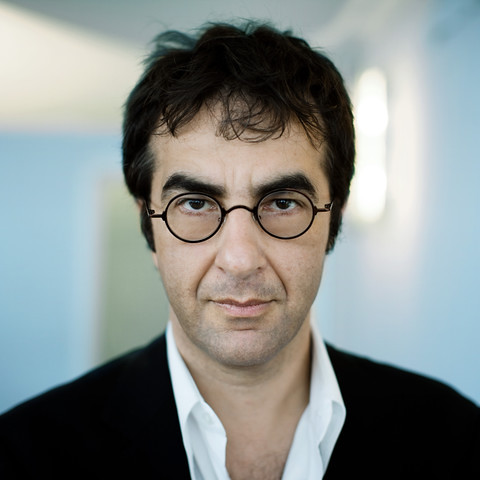
Atom Egoyan: The Architect of the Soul

"Young man, do you know what still causes so much pain? It's not the people we lost, or the land. It's to know that we could be so hated. Who are these people, who could hate us so much? How can they still deny their hatred? And so hate us... hate us even more?" Edward Saroyan


Ararat reflect on one the 20th centuries most unobserved genocides in history, one that took over 1 million lives of Armenians by the Ottoman Turks. What Egoyan does masterfully in his film is using a film within a film as a confessional of his pain and reflections of this part in history. We see this most when the character of Martin Harcourt breaks out of character during filming by an upset Ani played by Arsinee Khanjian when she finds out that parts of the films might not be historically accurate. Egoyan here is asking the audience to sacrifice technical detail for the gravity of the Armenian genocide where Mount Ararat is closer than what might be accurate during the film set. Mount Ararat believed to be the origin of Armenian people is interesting in itself for symbolic reasons. It is so because it is the largest physical peak in Turkey similar to how the Armenian genocide is the biggest physical atrocity to Armenians. This can be shown in the scene where the director's assistant justifies the set backdrop appear closer than what is historically accurate. It brings the pain into focus so people do not forget. It says this is who we are and where we come from.

What is one of the many themes in the film is the subjectivity of truth. Did the Turks relocate the Armenians or were they systemically killed in a planned fashion? Raffi the main protagonist and Ali the Turkish actor playing in the film within a film discuss the Armenian genocide and whether it really was a genocide or not. Ali sensitive to Raffi just wants to be civil but we see his hesitation to fully admit it ever happened. He admits the Armenians were moved but can't bring himself to say they were purposely killed. Being Turkish within an Armenian evironnment of this historical film brings him to question his own beliefs and whether he is betraying his people by associating with such an unfortunate event. It is like damning his own people by admitting guilt. Other instances of this include the purpose of a cause to solidify a a larger truth. That in which Ani says that her husband jumped off a cliff whereas her step-daughter is convinced Ani pushed her step-father off a cliff. It is hard to believe that Ani would do this but we are not sure. She is strangely intuitive and controlling of her son who may be the only person who can bring her closure. For her he is a confessional to which no sins are admitted. Her job as an art professor makes her interesting in the sense that maybe her interpretations of other peoples' art such as Arshile Gorky has sophisticated her own talent in manipulating the truth of the the death of her husband more bearable and manageable. We want to believe she is innocent like Raffi is when questioned by the customs agent but we are not fully sold.

Raffi strangely enough is the most interesting character in the film because of the complex way everyone seems to use and manipulate him to get emotional revenge on others. Although he is ultimately weak and passive he holds a lot of innocent charm that makes him trustworthy and somewhat endearing. He seeks his own version of the truth by going to Turkey to make sense of his father's death as a political fighter. To make the past events of the genocide clearer and perhaps gain a purpose like what his father had. Unfortunately none of this came true and he is more lost than ever. He has conviction but not enough drive to unravel his issues and the projections other people put on him to alleviate their own emotional burdens. This is shown when his mother has a strange jealousy of his girlfriend and vice-versa of his girlfriend using him to infuriate his mother. She does so because she believes his mother pushed her father off a cliff. He is just a tool who is passive and unclear about what he wants and how to achieve it. The absence of a father figure has obviously emasculated him and not given him that male strength to be assertive and this is shown when he is submissive to both his girlfriend and mother. The girlfriend, Cecilia wants to read his book but he tells her she can't read it because he promised him mother. If he had a male rolemodel he most likely would have just told her he didn't want her to read it and not have to justify why.


Christopher Plummer's character David who is a customs officer is a god-like character not judgemental, patient and never emotional. He is like St. Peter to Raffi's ultimate fate. David never antagonises or pushes Raffi too hard. He lets time and Raffi's own anxiety destroy him. He watches him like an unseeing eye. But his position is reversed as he has to deal with his son's questioning as he drills him about not accepting his lifestyle. Here he buckles under pressure and sees the pain of his son to be accepted. This in turn makes him give Raffi the benefit of the doubt during customs to whether or not Raffi was smuggling heroin.

The strongest and most dynamic character is that of Edward Saroyan played by Charles Aznavour. He is unapologetic in his mission as the director in the film working with Ani and Ali in his artistic choices. When Ali (Elias Koteas) who as a Turk in the film asks him what Edward thought of his opinion about the Armenian Genocide Edward just looks at him unwavering and says, "It doesn't matter what you think." He then buys him some champagne to set aside the harsh feelings. Ani also argues about the historical inaccuracy in the film but Saroyan is a vigilant and civil as possible. He appreciates her opinion but doesn't need it. His mind is decided and he doesn't bend or break for anyone.

The depictions of the Armenian genocide within the film include rape, torture and death but the characters themselves are the most tragic. They are heavily flawed, complex individuals who have much shame and turmoil in who they are and how they live. What can be most positively said about this film is that no character is a foil. They all serve equally important roles and complement and expand each other's complex natures even more.

What is best about the film is that it is not over dramatic and heavy handed. It lets you decide for yourself who is ethical and what to believe. Is Raffi innocent? The real tragedy in the movie is when we lose faith in Raffi as he is interrogated by the customs official.

The ending like the photograph the mother gives to her son says it all. Never forget who you are and never forget where you came from.

http://www.youtube.com/watch?v=PmNw_7NoWms